
Rio Rancho Previous Residents by Era
Rio Rancho has a short but unusually specific address history. Homes began in 1962, first residents arrived in 1963, and incorporation came in 1981. That makes a generic old-city directory approach misleading. The earliest useful search terms may be Rio Rancho Estates, a unit number, a subdivision, or a lot and block, not the current municipal label. The table separates sources by the local era they can actually support. It also marks gaps honestly, including the County Clerk’s unpublished online-index start year and the library’s unpublished phone-book years.
| Source | Years It Covers | Where Held | What It Shows |
|---|---|---|---|
| Rio Rancho homebuilding and first-resident history | Homes 1962; first residents 1963 | City history and Local History | Earliest plausible period for a Rio Rancho household trail |
| Recorded deed and plat index | Online start year not published | Sandoval County Clerk | Parties, dates, document numbers, book/page, and legal descriptions |
| Rio Rancho Observer | 1973–2017 | Loma Colorado Local History Room, DVD on public PCs | Local notices, obituaries, development and address context |
| Rio Rancho Roadrunner | 1975–1981 | Loma Colorado Local History Room, DVD on public PCs | Incorporation-era community and address context |
| Old phone books and yearbooks | Exact titles and years not posted | Loma Colorado Local History | Possible name-to-address or address-to-listing lead after staff retrieves material |
| Federal census | 1950 is the latest released census | National Archives and library databases | A predecessor place or a person’s earlier household, not original Rio Rancho residents |
Start with the Assessor and the Clerk if the question is about a particular property. Move to the library after a transfer date or early subdivision label is known. Use the census for a person’s earlier move or place, because the 72-year release rule means it cannot document the City’s first households. The Local History Collection started digitizing in 2019, but that does not mean all older materials are online.
Trace Rio Rancho Previous Residents Through Deeds
A backward property trail starts with the legal key. Sandoval EagleWeb offers address, owner-name, parcel, account, and legal-description searching. The Assessor’s public form separates the situs address from owner or buyer identifiers. Save the parcel number and legal subdivision, lot, block, tract, and unit before moving to the Clerk. In Rio Rancho, those fields can bridge a current address to an earlier Rio Rancho Estates plat or a later subdivision record. The assessment roll is a current property lead, not historic proof by itself.
The Sandoval County Assessor office is the starting point for that parcel and legal-description trail.
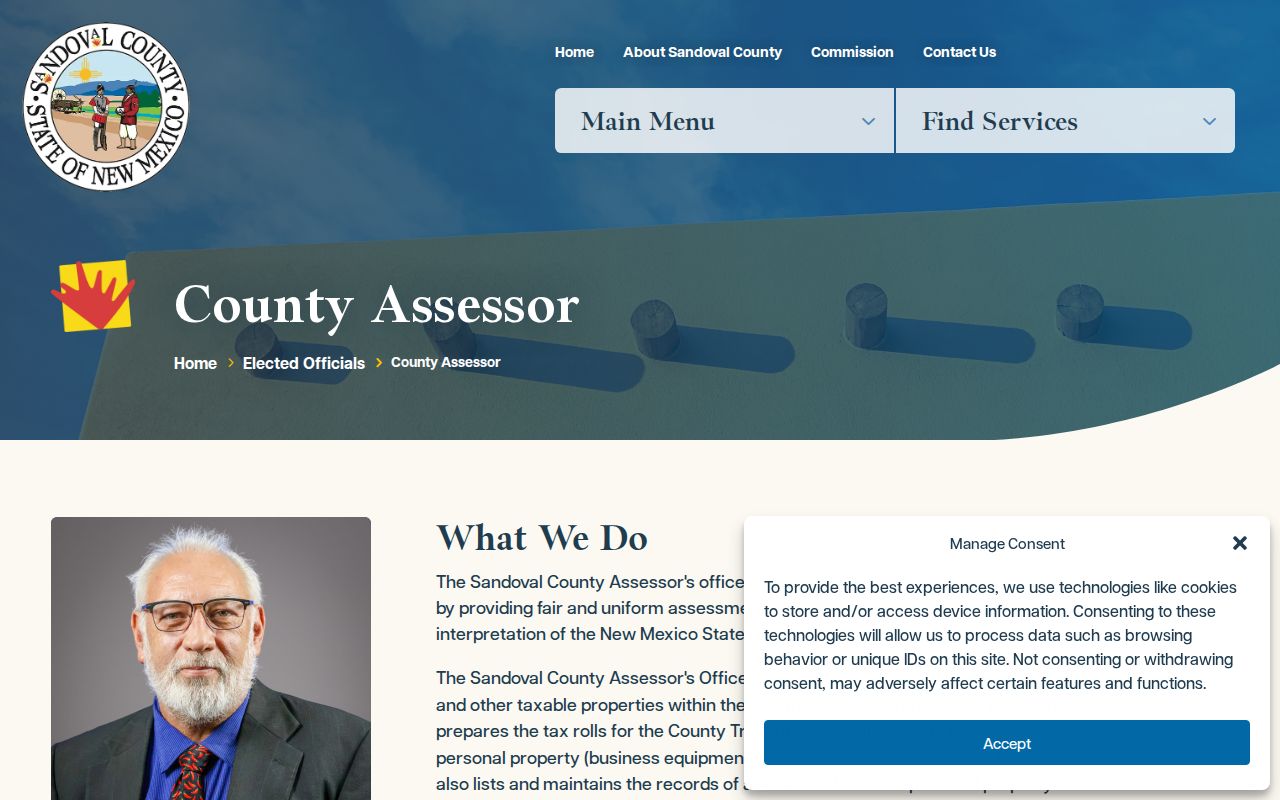
The office maintains assessment and ownership records from documents filed with the Clerk. EagleWeb says its information updates on April 1 and October 1, so a recent transfer should be checked in the recording system instead of inferred from an older assessment display.
- Record the EagleWeb account, parcel, situs address, subdivision, unit, lot, block, tract, and any book/page clue.
- Search the Clerk index by the current owner as a grantee, then compare recording date, instrument number, document type, and legal description.
- Read the earlier deed’s grantor and grantee. Search the prior seller as a grantee, or search the same legal description, to find the preceding transfer.
- Repeat each link only while the lot, unit, tract, or plat relationship still matches. A subdivision change, merged parcel, trust, or entity can break continuity.
- Request the underlying deed, plat, book, or microfilm lead when an index result is not enough. The Clerk’s portal says its index is a guide to the document, not a substitute for it.
The Sandoval County Clerk recorded-documents hub connects the public search route with recording and copy information.
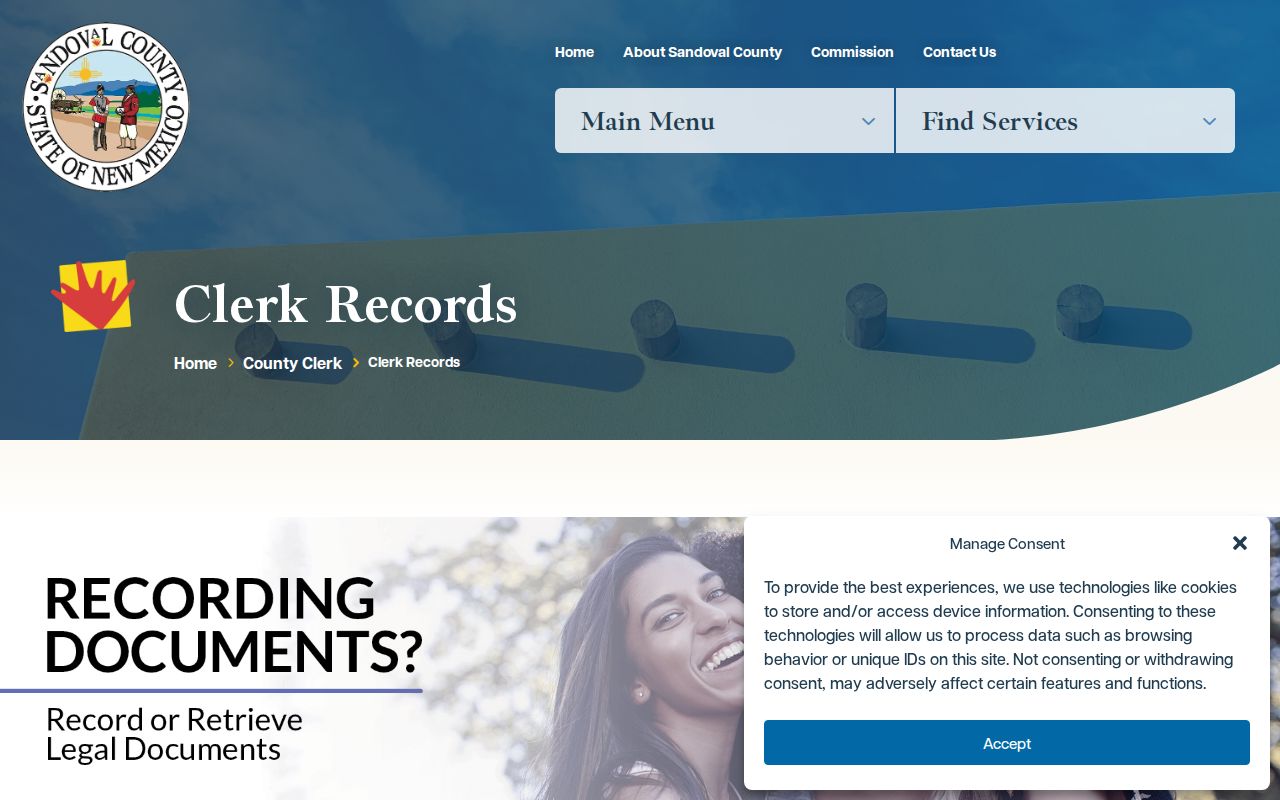
The index supports Either Party, Grantor or Party 1, Grantee or Party 2, dates, document number, book/page, platted legal fields, PLSS fields, and document type. Its advanced name search also supports documented wildcard, sound-alike, possible-letter, fuzzy, and Boolean tools for spelling variation.
- Grantor and grantee
- The grantor transfers an interest in a document; the grantee receives that interest. Read both names in the context of the actual instrument.
- Chain of title
- A documented sequence of transfers for the same property. It must be tested at every lot, plat, boundary, or entity change.
- Legal description
- The property’s formal subdivision or survey description. It is often more stable than a street address when tracing an older Rio Rancho parcel.
Search Rio Rancho Previous Residents by Unit
Rio Rancho Estates language is a working record key, not just local history. AMREP began building homes in 1962, first residents arrived in 1963, and more land was purchased and platted by 1971. A transfer or local notice from that period may identify a unit, subdivision, lot, block, tract, or book and page before it uses a familiar current street label. Collect those terms from every deed and map result, then use them with the Clerk’s platted-legal fields and the Assessor’s advanced search.
| Rio Rancho Estates unit | Use with subdivision and legal fields when a historical result predates later municipal terminology. |
|---|---|
| Lot and block | Test against each deed and plat so a similar street name does not join different parcels. |
| Book and page | Use as a direct Clerk index lead when it appears in a parcel or document record. |
| Street direction and suffix | Retain exactly as recorded when comparing an address with City GIS or a newspaper item. |
Sandoval County’s land and legal history is older than the City, but that does not make every older county record a Rio Rancho household record. Mark the transition from pre-development land description to Rio Rancho Estates platting, incorporation, annexation, and later neighborhood development. The date and legal place should travel together in every previous-residents note.
Keep Rio Rancho Address Context
Address continuity is a real issue in Rio Rancho. The first City annexation came with incorporation in 1981, followed by additions in 1982–83, 1986, 1995, 1998, and later developments in the 2000s. A current City address can therefore have an earlier county, subdivision, or Rio Rancho Estates context. Search the historical street with its unit, subdivision, lot and block, and county reference. Do not depend on the current city label alone when the deed, plat, newspaper, or map belongs to another development era.
The Clerk’s public Self Service portal also includes Fraud Notify, an email alert option for documents recorded in a person’s name.
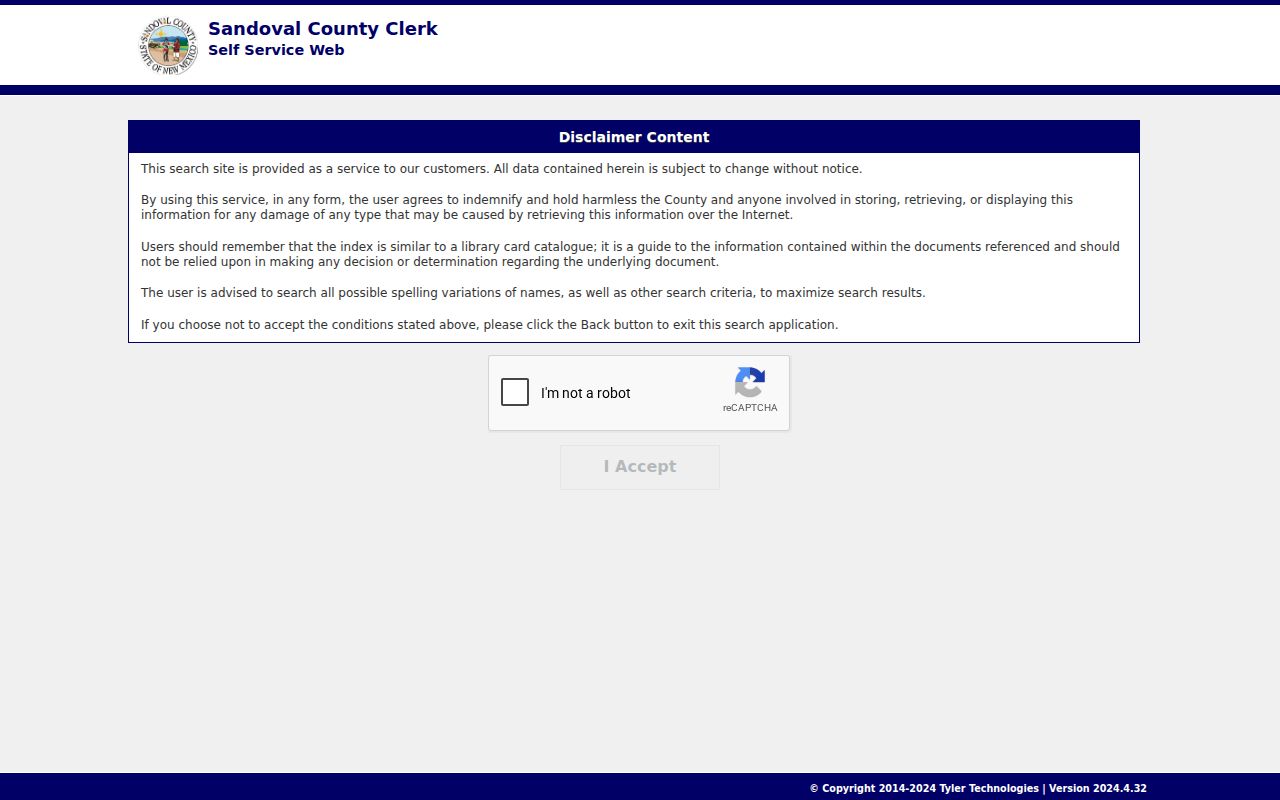
Fraud Notify can help a person monitor future recordings in a name, but it does not prove that a title history is complete or that a record has no problem. A deed image and the parcel’s legal continuity remain the stronger tools for a past-owner question.
City maps and VisionView can add parcel, street-component, ZIP, subdivision, acreage, and permit-date context. City GIS warns that its datasets are reference information and not a legal survey. For a boundary or ownership issue, compare the recorded plat, deed, or survey rather than treating a screen map as the final authority. No official local Sanborn map coverage or citywide renumbering date was located, so neither should be assumed.
Rio Rancho Estates key. Retain the old unit, subdivision, lot, and block terms with every dated result. They often connect a 1960s or 1970s record to a newer street label.
Use Loma Colorado for Previous Residents
The Loma Colorado Main Library Local History Room is the confirmed local stop when a deed creates a date window but not a household answer. Its non-circulating collection includes books, manuscripts, videotapes, posters, flyers, demographic material, local photographs, maps, oral histories, old phone books, yearbooks, and newspaper DVDs. Items are identified in the catalog by the location “Loma Colorado Local History.” Access is during regular library hours with staff assistance, and the desk may ask a researcher to leave identification or a library card while using materials.
Use the online digitized-image catalog for a subdivision, road, or unit name, then ask staff about material that remains undigitized. Digitization began in 2019. It is an access initiative, not a claim that every phone book, map, or newspaper item appears online. The collection’s physical format is useful here because it can preserve neighborhood wording that an address search does not recognize.
- Bring the parcel number, legal description, document number, old street spelling, and a narrow date range.
- Ask for Rio Rancho Estates as well as Rio Rancho when the period reaches the City’s early development years.
- Record the item title, date, call information, and page or image reference before comparing it to a deed or map.
- Keep an unconfirmed name or address as a lead until an independent property, court, obituary, or other dated source supports it.
Old phone books are confirmed holdings, but no official public page supplied a complete title list, exact years, or a reverse-directory run. A staff retrieval is the accurate next step, not a reason to guess that a particular volume includes an address listing.
Pair Rio Rancho Previous Residents With History
Past owners and past households are not the same thing. Once a deed supplies a name, date window, and legal location, ask Loma Colorado staff for old phone books, maps, oral histories, yearbooks, and the relevant newspaper DVDs. The verified Observer run spans 1973–2017, while the Roadrunner spans 1975–1981. The library holds old phone books, but it does not publish a confirmed reverse-directory title or a complete year run online. Ask for a catalog search for a name, street, subdivision, unit, and period instead of assuming an address listing exists.
The New Mexico historical vital-record access rule sets the limits for old birth and death records.
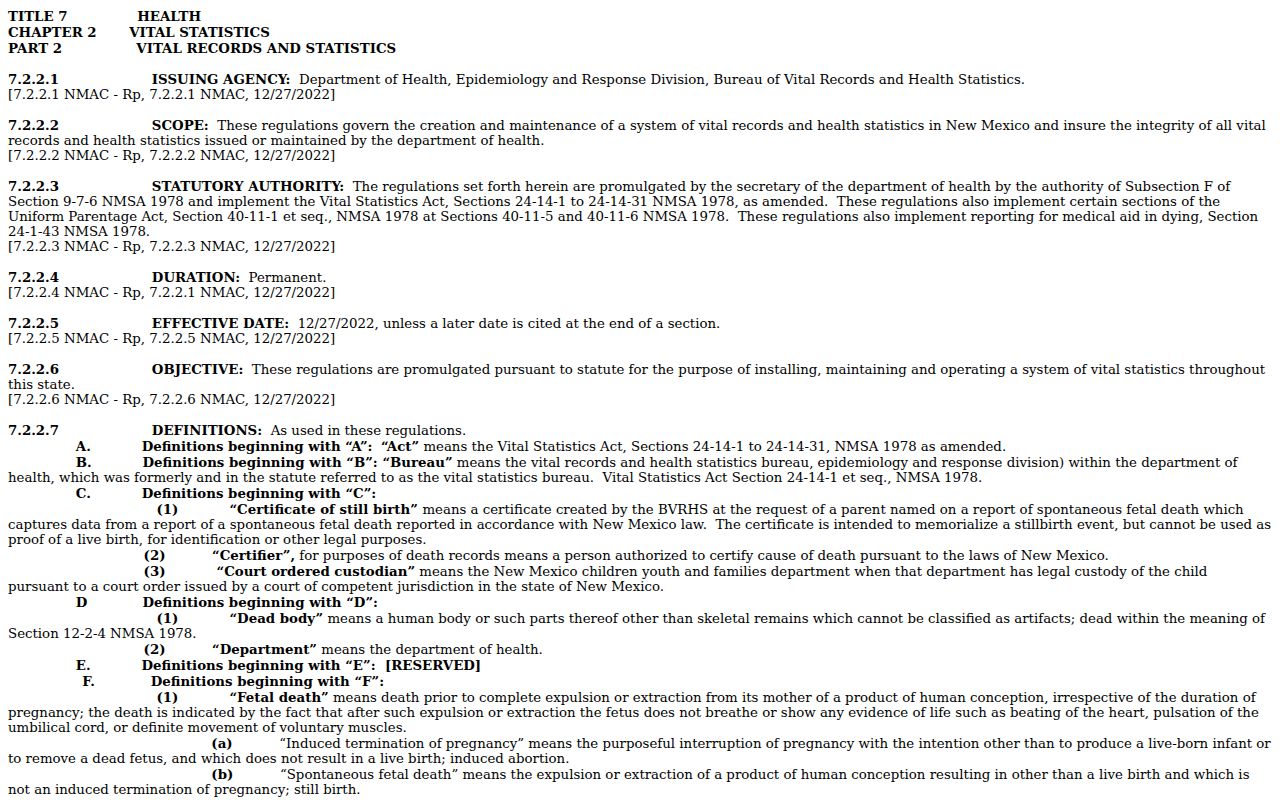
Birth records become public after 100 years when the registrant is deceased, and death records after 50 years, with an application and fee. These records can support a dated historical question, but they are not an open name-search shortcut. The state did not publish an official statewide open birth or death name index in the research sources.
Use this household-level flow after each reliable property date: deed or plat date → library search for the same period → name or address lead → nearest released census for an earlier place → court, probate, obituary, or eligible vital-record confirmation. The most recent released federal census is 1950. Since Rio Rancho began after 1962, census work will usually describe a resident before the move into Rio Rancho, rather than the City address itself.
For a Sandoval County marriage event, the County Clerk marriage-record route explains its separate copy options.
Unredacted marriage copies are limited to the parties or a court order and require identification for an unredacted certified copy. Redacted copies follow a different route. A divorce decree belongs with the Thirteenth Judicial District Court or the court where it was filed, not Recording and Filing.
- Criss-cross directory
- An address-led directory format that may connect an address to a listing. Rio Rancho has no confirmed public title or year run, so ask library staff whether one exists for the needed period.
- Enumeration district
- The geographic area assigned to a census taker. It helps locate a historical census page after the right earlier place and date are known.
- Corroboration
- Independent details that agree, such as a deed date, a legal description, and a dated local notice. It is stronger than repeating one index entry.
Pair Rio Rancho Previous Residents With Census
Federal census work is most helpful on the far side of a Rio Rancho move. The National Archives follows a 72-year release rule, and 1950 is the latest released census. Because the City’s first residents arrived after 1962, a census page will more often locate the same person in an earlier town, a predecessor household, or an out-of-state move than at the Rio Rancho address. Treat that difference as useful chronology, not a failed search.
| Known Rio Rancho fact | Historical step | What to compare |
|---|---|---|
| Deed or plat date | Search Local History in that narrow period | Unit, street wording, deed party, and development context |
| Older name or address lead | Find the nearest released census in the earlier place | Name spelling, family grouping, age range, and place |
| Census geography | Use the enumeration district only after place and date agree | Whether the historical neighborhood fits the person, not the current parcel |
| Death or estate lead | Check court, obituary, or eligible vital-record route | Date, jurisdiction, and relationship evidence |
Ancestry Library Edition is available on Rio Rancho Public Library computers for broader census, directory, yearbook, land, vital, military, immigration, and church research. It is licensed library access, not a City resident index. When a search uses it, preserve the original collection title and date so another source can test the lead.
Use Rio Rancho Previous Residents Carefully
Obituaries, probate matters, and unclaimed-property records can mark an endpoint in a historical trail, but each carries a narrow purpose. A probate question should begin with the decedent’s name, court, and case information, then be confirmed by the court clerk. New Mexico’s unclaimed-property search may offer an apparent-owner name and older city or state clue, yet only the owner, a lawful heir, or an authorized representative may claim. A seller’s name on a deed is not automatically the next place that person lived, and a deed mailing address can be a trust, office, or other contact.
For local collection work, the Rio Rancho Directory Book has the fuller discussion of library holdings. Bring the Clerk instrument number, Assessor parcel number, historical street spelling, and an approximate date to Loma Colorado. Staff can direct a researcher to maps, newspapers, or phone books without inventing an occupant from incomplete material.
Records should remain separate when they disagree. A missing name can reflect a restricted record, an address mismatch, a spelling issue, a different court, or a collection gap. The responsible response is to preserve the source, date, page or document number, and uncertainty rather than combine weak hints into a confident claim about a person.
Lawful use. Previous-resident research is appropriate for family history, estate work, property history, anti-fraud checks, and civic curiosity. It must not be used to track, stalk, harass, intimidate, or harm any living person.
Note: A current owner record, a historical phone-book listing, and an old newspaper reference answer different questions and should be dated before they are compared.