
Rio Rancho Resident Lookup Records
No official system is a complete roster of Rio Rancho residents. Each record instead documents a limited relationship. Sandoval County EagleWeb is useful when an owner name, parcel, situs address, or legal description is known. The County Clerk index puts named parties next to recorded instruments. New Mexico Case Lookup supplies public case information, while the state health department and County Clerk control different vital-event copies. State business and license systems can confirm a filing or credential relationship. A careful resident lookup keeps those purposes separate and tests whether the records describe the same person.
| Record | What It Confirms | Where to Search | Access |
|---|---|---|---|
| Assessment roll | Person or entity associated with taxable property, plus parcel and situs context | Sandoval EagleWeb | Public guest search; stated updates are April 1 and October 1 |
| Recorded documents | A party, instrument, date, and legal-description relationship | Sandoval Clerk Document Search | Public index; request a copy when the document itself matters |
| Case information | Public case number, court, parties, status, and filed-date context | New Mexico Case Lookup | No registration stated; documents and many personal details are not shown |
| Vital event records | An eligible birth, death, marriage, or divorce record route | NM DOH BVRHS or the proper court and county custodian | Restricted, redacted, or historical-period rules apply |
| Business or license filings | A filing role, credential, status, or date | SOS Enterprise and RLD online services | Relationship evidence, not proof of a current residence |
| Local history material | An older name, newspaper notice, map, yearbook, or telephone-book lead | Loma Colorado Local History | In-library and uneven by year |
Use the record that fits the fact already in hand. A parcel or street address points first to EagleWeb, then to the Clerk index. A public court matter starts with the court and case date. A family-history question may need a library item or an eligible vital-record request. A shared surname alone is not enough to identify a Rio Rancho resident.
Match Rio Rancho Residents to Parcels
For a name-to-property check, begin with the Sandoval Assessor rather than guessing from a mailing label. EagleWeb accepts owner names in the published “Last Name First Name” format and also offers account number, parcel number, business-name, and detailed situs fields. A situs address is the place of the taxable property. It is not automatically a person’s mailing location or a statement that every person there is an owner. Rio Rancho’s planned units and subdivisions make the parcel number and legal description especially useful cross-checks.
- Search EagleWeb with the exact name spelling, or use a known address, account number, or parcel number.
- Record the public parcel, situs address, subdivision, unit, lot, block, tract, and date checked. Preserve directional street components.
- Compare those details in the City’s VisionView parcel layer. The map helps reconcile an address with the legal place, but it does not establish title or household membership.
- Search the Clerk index by Either Party, Grantor, Grantee, date, or the platted legal fields. Use its documented wildcard or sound-alike tools when a name varies.
- Obtain the underlying instrument if a conclusion depends on it. The Clerk calls the index a catalog-like guide, so an index line is not the full document.
A search-result screen can show account number, parcel number, situs address, legal summary, city, ZIP code, and owner-related identifiers. Those fields create a useful trail, but they do not prove present physical presence. An entity, trust, estate, or owner who lives elsewhere may appear in an assessment record. Treat a match as stronger only when the parcel or legal description also aligns with the recorded document.
Sample public-result inventory. Record the account number, parcel number, situs address, legal summary, city, ZIP code, and date checked. Then compare only the fields that identify the property or documented relationship, not assumptions about a household.
- Situs address
- The physical location assigned to taxable property. It can differ from a tax-contact or mailing address.
- Parcel number
- A property identifier used by the Assessor and often useful when comparing a map, deed, and assessment result.
- Legal description
- The subdivision, unit, lot, block, tract, or survey description that identifies the land more reliably than an old street spelling.
Note: EagleWeb’s stated update dates mean a recent transfer should be checked against the Clerk or the appropriate county office.
Check Rio Rancho Resident Court Matches
Public court information can help distinguish two people with the same name, but it must be read narrowly. New Mexico Case Lookup provides general public access without registration for covered appellate, district, magistrate, metropolitan, and municipal matters. Search by the court or location, a party name, case category, case number, status, or filed-date range as the portal allows. Save the court, case number, filing date, and status. Do not treat a result as a current-address record because the public system suppresses address information and does not provide documents.
The state’s re:SearchNM access portal illustrates the separate, role-based document route.
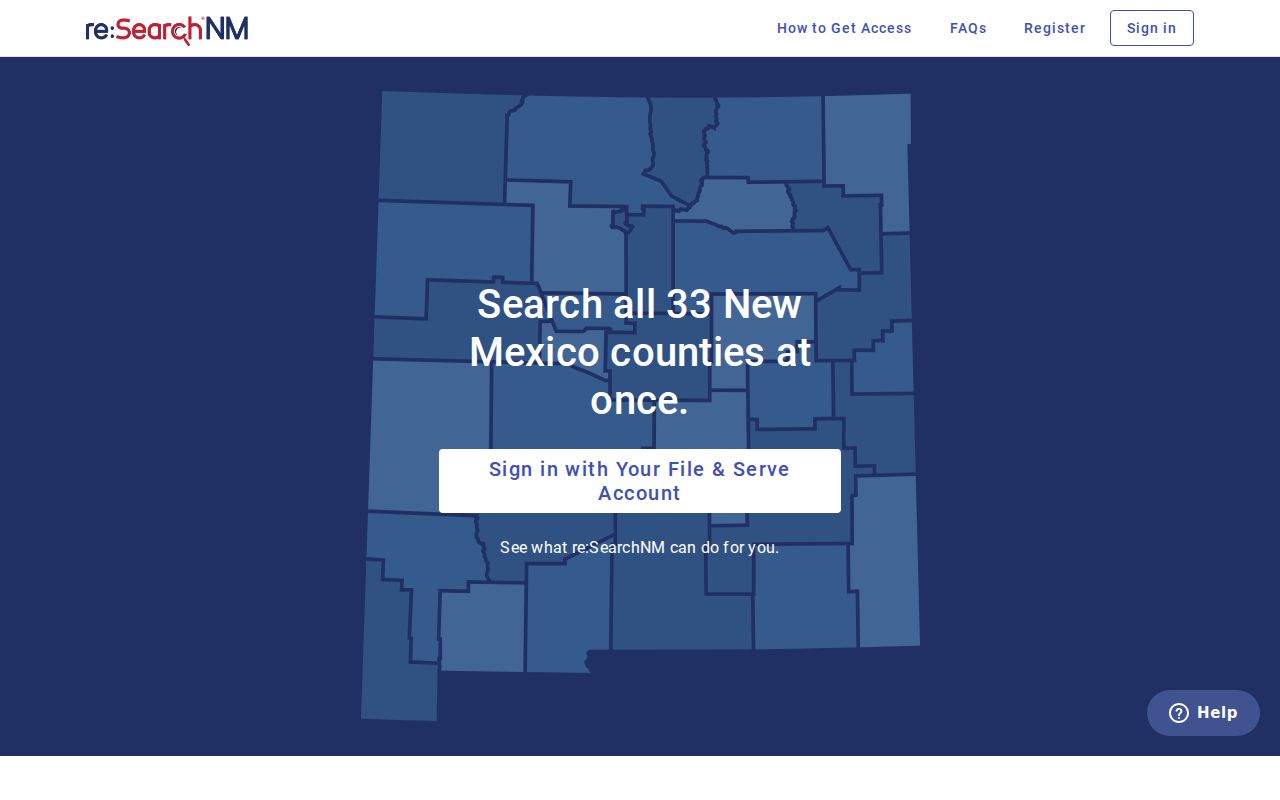
re:SearchNM is for registered users whose profile and case role permit access. It is not a complete public document database, so its presence should not be used to infer that a file is available to every searcher.
For a city-level matter, the Rio Rancho Municipal Court public-access portal is a separate source.
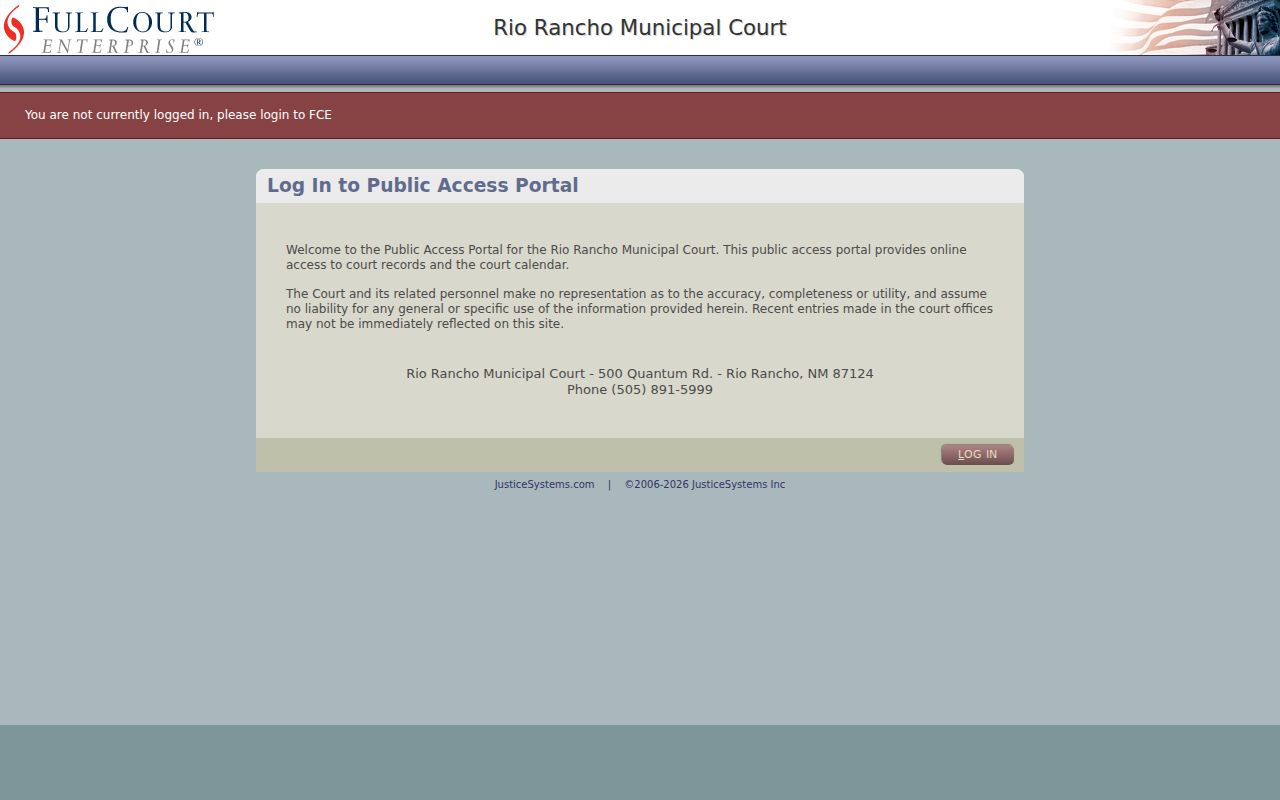
Municipal Court covers local traffic, arrest, animal-control, code-enforcement, and petty-misdemeanor matters, not civil cases. Recent entries may lag, and protected, juvenile, sealed, expunged, or otherwise restricted matters may not appear. Confirm a known case number with the court clerk before requesting a copy.
- Docket
- The court’s running list of filings and events in a case. It is not the same as every document in that case.
- Index versus image
- An index describes or points to a record. An image is a view of the actual recorded document, when the custodian makes one available.
- Certified copy
- A copy issued and authenticated by the custodian for a purpose that requires official certification.
Rio Rancho Resident Lookup Voter Limits
New Mexico’s statewide SERVIS system has two very different routes. My Registration Information is a secure self-service path for a voter to check their own status and information. It is not a public name-and-address directory. A person seeking statewide voter data instead faces the Secretary of State’s authorization process, fees, and protected fields. That distinction matters when a name appears in more than one Rio Rancho or Sandoval County record.
| Self-service use | Personal registration-status check, not a browseable roster. |
|---|---|
| Authorized data route | Signed Voter Data Authorization Form and the current Secretary of State process. |
| Protected fields | Social Security number, full date of birth, and email are not public voter-file fields. |
| What a match cannot prove | Party, registration, or a voter-file appearance does not establish every person at an address. |
SERVIS data may include registration-related fields for an authorized recipient, and the published fee schedule distinguishes electronic files with or without voting history. Voting history means participation information, not ballot choices. A record may be inactive, cancelled, moved, or protected. The safer confirmation is the one the correct custodian can lawfully provide for the particular question.
Request Rio Rancho Resident Vital Records
Vital-event evidence has a custodian split that cannot be solved with a general resident search. The New Mexico Department of Health Bureau of Vital Records and Health Statistics issues birth and death certificates. Sandoval County Clerk is the custodian for a marriage licensed in the county. A divorce decree belongs with the court where it was filed. Check the event type first, then use the current application or clerk route for eligibility, identification, fee, and copy rules.
| Birth certificate | Restricted unless the requester qualifies, or the historical 100-year rule applies after the registrant’s death. |
|---|---|
| Death certificate | Restricted unless the requester qualifies, or the 50-year historical rule applies. |
| Sandoval marriage copy | County Clerk route; redacted and unredacted copy rules differ. |
| Divorce record | Judicial record; obtain case information and copies from the court of filing. |
No official statewide open New Mexico birth or death name index was found in the research. A certificate request is therefore an eligibility-based confirmation process, not a way to expand a name into a private profile. For a qualifying historic record, include enough information for the custodian to locate it and expect to pay the stated fee.
Correct Rio Rancho Resident Records
Records are corrected where they are kept. An assessment problem belongs with the Sandoval Assessor. A concern about a recorded instrument belongs with the County Clerk. Court docket or file issues go to the court clerk, while voter and vital matters go to their respective county or state custodians. Sending one generic removal request to unrelated offices does not resolve a source-specific error and can obscure the record trail needed to fix it.
Property and documents
Use the Assessor for assessment data and the Clerk Recording and Filing Division for recorded-document questions or copies.
City and court material
Use the City Clerk for City-held records and the relevant court clerk for a case file, certification, seal, or access question.
State-held records
Use the Secretary of State or County Clerk for voter administration and DOH BVRHS for birth or death certificate corrections.
IPRA covers inspection of existing non-exempt records, not a demand that an agency build a new list of people. A narrow request with a document number, parcel, permit number, or date window gives the custodian a record it can locate. That approach also leaves room for required redactions and confidentiality rules.
Limit a Rio Rancho Resident Lookup
Several official systems have firm access boundaries. The public voter service is designed for people to check their own registration, not for browsing names or streets. Full SERVIS voter data requires a signed authorization and fees, while Social Security numbers, full dates of birth, and email have statutory protections. The New Mexico Secretary of State also emphasized voter-data privacy in a July 2026 announcement. Use the authorization route only when it fits the current rule and purpose, and do not turn a voter-related record into a neighborhood list.
Vital records have a different split. New Mexico birth and death certificates are restricted to the registrant, immediate family, or someone with direct and tangible legal interest unless the historical rule applies. Under 7.2.2.20(G) NMAC, a birth record becomes public after 100 years if the registrant is deceased, and a death record becomes public after 50 years. Sandoval marriage copies and district-court divorce records are held through different custodians. No official statewide open name index for New Mexico birth and death records was located.
The New Mexico Corrections offender search is another limited state system, not a general Rio Rancho resident lookup.
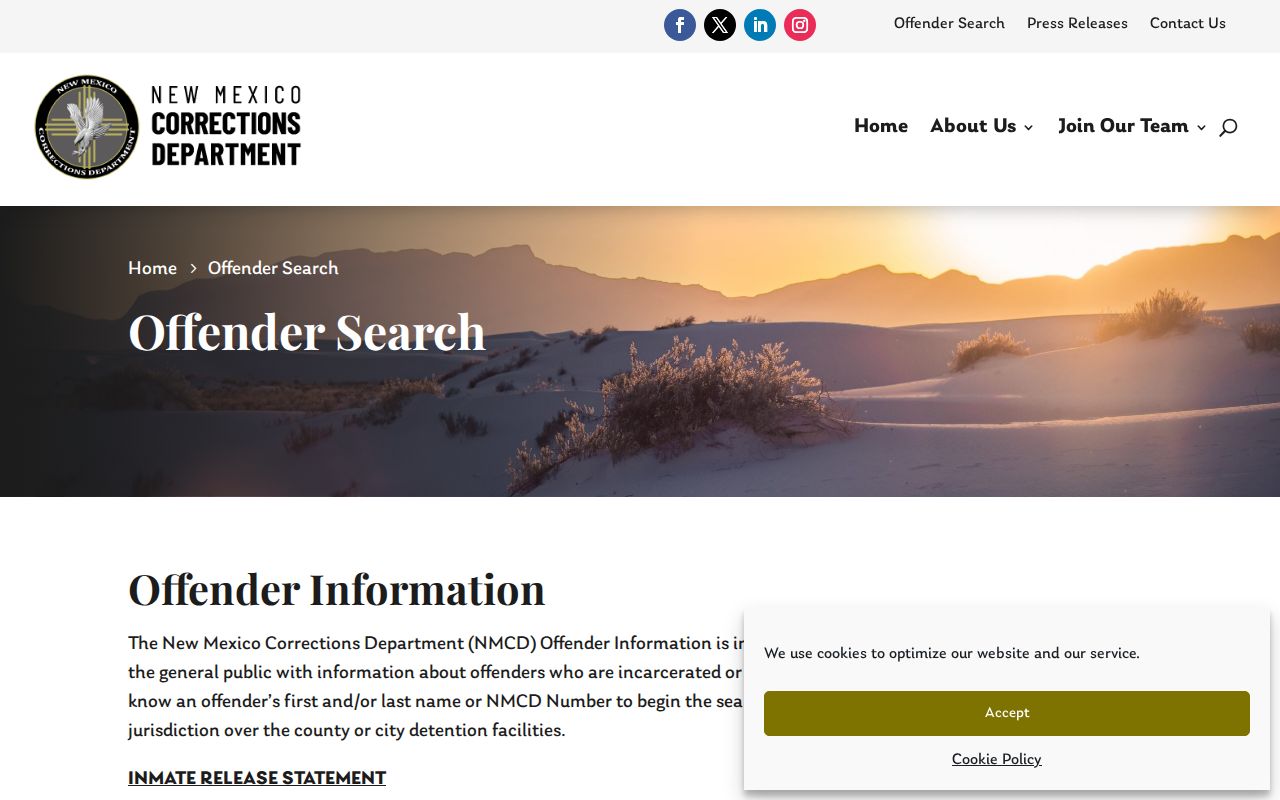
It searches a population under NMCD jurisdiction by name or NMCD number. NMCD says it does not control county or city detention records, and an absent result proves nothing about a person. Location and legal status should be verified with the responsible agency.
Lawful use. Use a resident lookup for personal, family-history, estate, civic, anti-fraud, or safety questions that have a lawful purpose. New Mexico’s harassment and stalking laws prohibit using information to follow, intimidate, harass, or harm another person.
Confirm Rio Rancho Resident Filing Clues
When a question concerns a business role or a professional credential, use the state source that created the record. The Secretary of State’s Enterprise system handles business entities, commercial filings, UCCs, agricultural liens, trademarks, and notarial matters. A result may identify a registered agent, officer, debtor, or secured party. That is a filing connection, not proof that the named person lives at the listed address. The Regulation and Licensing Department similarly asks users to choose a profession and then search by fields such as name, license number, status, or address.
The official New Mexico SOS Enterprise portal is the appropriate starting point for a statewide business or UCC filing relationship.

Compare the filing date, entity name, status, and record type with the person’s other verified facts. A result that only shares a name should remain a lead, not an identification.
An heir question has its own careful path. First locate a public probate matter with the decedent’s name and court information, then confirm it with the clerk. The state unclaimed-property search can supply an apparent-owner name and older city or state clue, but only a rightful owner, heir, or authorized representative can claim property. Keep the source date and court or claim reference with each finding. That preserves a record trail without creating a dossier about a living person.
If no portal holds the needed City record, New Mexico’s Inspection of Public Records Act permits inspection of existing non-exempt records. A written request should identify the record with reasonable particularity, such as a permit number, a document number, or a narrow date range. The law does not require an office to create a new list, answer a broad people-search question, or compile a new report. Rio Rancho directs City requests through its Clerk, while county, court, state, and vital records belong with their respective custodians.
Respect intentionally incomplete records. Safe at Home gives qualified New Mexicans a substitute mailing address, and public court results suppress addresses and other personal information. An apparent mismatch is not an invitation to reconstruct a protected location from other sources. For an authorized matter, use the custodian’s formal route instead.
Note: If an official record is wrong, contact the Assessor, Clerk, court clerk, City Clerk, County Clerk or Secretary of State, or DOH that actually keeps it.